Workshop on High-Pressure Mineral Physics and Geophysics Applications
February 2 – 6, 2026
ICTP-SAIFR, São Paulo, Brazil
Zoom ID: 865 8516 5021
Password: mineral
Home
Materials simulations bring powerful methods for predicting the physical properties of complex mineral phases, assemblages, and melts under the extreme conditions expected in Earth’s interior (~6,500 K and 3.6 Mbar). They play a central role in probing the deep Earth and have brought us to the threshold of developing a general predictive theory of planetary interiors grounded in their material properties.
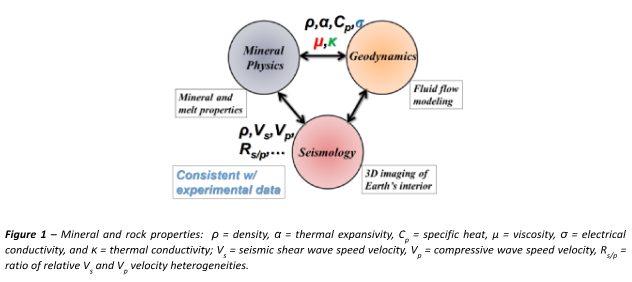
This workshop advances this vision by bringing together a multidisciplinary team of scientists to discuss the integration between three core fields of computational geophysics: mineral physics, seismology, and geodynamics.
Abstracts Collection, Schedule and Practical Information (pdf) here
Organizers:
- Renata MM Wentzcovitch (Columbia University, New York, USA)
- Carlos Alberto Moreno Chaves (IAG, USP, São Paulo, BR)
- Caetano Miranda (IF-USP, São Paulo, BR)
- John Hernlund (Earth-Life Science Institute, Tokyo-Tech, Tokyo, JP)
- Alexandre Reily Rocha (IFT/UNESP, ICTP/SAIFR, São Paulo, BR)
- Victor Sacek (IAG, USP, São Paulo, BR)
Announcement:
Application is now closed
Click here for satisfaction survey
List of participants here.
Speakers
Speakers
- Alex Antonelli (Unicamp, Brazil) – Non-equilibrium free-energy calculation of phase-boundaries using LAMMPS
- Alexandre Reily Rocha (ICTP-SAIFR, Brazil) – Deep potentials and applications to materials: from water and ice to hematite
- Arwen Deuss (Utrecht University) * – Seismic structure of the Earth’s inner core
- Bill McDonough (WPI-AIMEC – Tohoku University, Japan) – Earth’s composition and power
- Bob Myhill (Bristol, UK) * – BurnMan and Beyond: Past and Future Challenges in Computational Geothermodynamics
- Boris Kaus (University of Mainz, Germany) – Recent Advances in Computational Geodynamics
- Caetano Miranda (IFUSP, Brazil) – Computational Petrophysics: Integrating Multiscale Modeling and Synchrotron techniques for CO2 Storage and planetary sciences
- Caio Ciardelli (Northwestern University, Evanston, USA) – Cross-compatibility of 3D models of South-American mantle structure
- Carlos Alberto Moreno Chaves (IAG-USP, Brazil) – Assessing Mantle Velocity Uncertainty in Receiver-Function Imaging of the Transition Zone Using the Spectral Element Method
- Edward Garnero (Arizona State University, USA) – Illuminating Earth’s Dynamic Deep Interior: Multi-Scale Structures and Their Significance
- Edison Zacarias (IFGW-Unicamp, Brazil) – Materials under extreme conditions
- Fernanda Gervasoni, (Visiting LNLS-CARNAÚBA beamline, Brazil) – Probing the Deep Earth: Insights from Mineral Inclusions in Super-Deep Diamonds
- Gabriel Schleder (LN-Nano, CNPEN, Brazil) – The era of Universal Machine Learning Interatomic Potentials for Atomistic Simulations of Materials
- Iurii Timrov (Paul Scherrer Institute, Switzerland) – Advancing accurate first-principles modeling of complex transition-metal compounds using density-functional theory with Hubbard functionals
- Jeroen Ritsema (University of Michigan, USA) – How well can we measure the S/P velocity ratio in the LLVPs of the lower mantle?
- John Hernlund (ELSI, Science Tokyo, Japan) – Using Seismic Tomography and a Solid-Solid Phase Change at ~1 Mbar to Image Convection Currents Above the Earth’s Core
- Jung-Fu Lin (UT-Austin, USA) – Thermal Transport and Geodynamics of the Earth’s Interior
- Kate Kiseeva (American Museum of Natural History, USA) – Probing the deep earth: insights from mineral inclusions in diamonds
- Laura Cobden (U of Utrecht, Netherlands) – Global 3D model of mantle attenuation using seismic normal modes
- Maureen Long (Yale University) * – New insights into deep mantle dynamics from seismic observations and other constraints
- Maurice de Koning (IFGW-U. of Campinas, Brazil) – Atomistic Simulations of Water under Extreme Conditions
- Narcizo Marques de Souza (LNLS-EMA beamline, Brazil) – Opportunities for mineralogy and materials science with in situ high pressure synchrotron techniques at SIRIUS
- Patrick Cordier (U. de Lille, France) * – Nanomechanical Testing of Earth Materials: Linking Atomic-Scale Deformation Mechanisms to Planetary Interior Dynamics
- Paul Tackley (ETH, Switzerland) – The importance of phase transitions in mantle convection on Earth and other terrestrial planets
- Philippe Carrez (U. de Lille, France) – Multi-scale modelling of plastic properties under extreme conditions
- Renata Wentzcovitch (Columbia U., USA) * – Modeling Earth from Atomic to Global Scale
- Rommulo Conceicao (UFRGS, Brazil) – The Effect of Volatiles (CO2 and H2O) in Lithosphere-Asthenosphere Boundary at 2.5, 4.5 and 10 GPa: from degassing to storage
- Stephane Labrosse (U. of Lyon, France) – Solid-state mantle convection coupled with a crystallising basal magma ocean
- Suzan van der Lee (Northwest University, USA) – Earth’s Deep Water Cycle Illuminated by Seismic Tomography of the American Mantle.
- Thorsten Becker (UT-Austin, USA) – On the role of phase transitions for mantle convection
- Victor Sacek (IAG-USP, Brazil) – The Implications of Mantle Convection for the Landscape Evolution of South America
- Yang Sun (Xiamen University, China) – Simulations of iron alloy under the Earth’s core conditions
*Virtual speakers
Registration
Program
The schedule might be changed.
Posters
Tuesday – February 3
- Barros Sousa, Joaquim De Paula (Universidade de São Paulo, Brazil): Investigating the Mechanical Properties of Materials in Planetary Interiors via Computational Simulations
Investigating the mechanical properties of materials under extreme conditions is essential for comprehending the stability and behaviour of phases that may exist in planetary interiors. The central aim of this research is to determine the elastic mechanical properties of the orthorhombic P21212 phase of methane (CH4), theoretically predicted, using first-principles simulations. Secondary objectives involved calculating the elastic moduli via two distinct methods: energy vs. strain and stress vs. strain. To validate the methodology, we studied the cubic I Fm3m phase, which is stable at low temperatures and pressures and for which experimental data exist. Moreover, this work also sought to understand the effect of dispersion corrections, which are significant in molecular crystals, on the structural and mechanical properties of these systems.
- Contiero, Klaus (IAG/USP, Brazil): Seismic Attenuation in South America from Multiple ScS Wave Phases
Seismic attenuation is one of the most important factors for characterizing the mantle structure, and it also provides information about thermal structure, fluid presence and composition of the mantle, especially in the case of shear waves. The multiple ScS phases (S waves reflected at the mantle-core interface), with nearly vertical geometry and one of the cleanest phases traveling through the mantle, has been widely used to determine attenuation. At epicentral distances of up to 20°, the ScS and ScS2 phases are recorded with high amplitudes at relatively low frequencies (f < 50 mHz) and without interference with signals from other main phases. It is assumed that the long-period ScS and ScS2 waveforms are insusceptible to multipath and amplification by layers and heterogeneity in the lithosphere and deep mantle. In this research project, we will use new seismological stations, with the improvement in the number of stations in recent decades to increase coverage on the South American platform, mainly in Brazil (notably the XC network, in the Paraná (PB), Chaco-Paraná (CB) and Pantanal (PtB) Basins), to calculate the ScS2/ScS amplitude ratios and an updated map of the quality factor Q for South America. Our database will consist of data from the XC network, notably from stations west of the Paraná Basin, to obtain data on epicentral distances of up to 20° and low frequency, as used in recent studies of this type, and synthetic waveforms. Therefore, seeking to expand the understanding of the dynamics of the mantle beneath South America, especially in Brazil, our objective in this doctoral project is to understand how seismic attenuation can bring links with the geodynamics of the region, such as mantle convection and plate tectonics, especially regarding the presence of fluids, combining data from velocity anomalies and seismic attenuation to better understand the mechanisms responsible for the movement of the South American plate, the evolution of the lithosphere in this region and obtain information on how the subduction of the Andes can influence geodynamic processes.
- De Sá Fernandes, Yasmin (Instituto de Geociências da Universidade de São Paulo, Brazil): Crystallization experiments of high-potassium, silica-undersaturated rocks at 1 GPa
The study of the crystallization conditions of a high-potassium, silica-poor picrite from Santa Bárbara Island, located in the Abrolhos Archipelago, integrates the Petrobras Project 2024/00039-9, titled “Magmatismo alcalino do SE e a pluma de Vitória-Trindade: plumbing systems e temperaturas do manto” (SE Alkaline Magmatism and the Vitória–Trindade Plume: plumbing systems and mantle temperatures). This project seeks to better understand the petrogenetic processes associated with intraplate alkaline magmatism in southeastern Brazil and to constrain the thermal and chemical characteristics of the mantle source involved in the generation of these magmas. To investigate the crystallization sequence and phase stability of the Santa Bárbara picrite, controlled high-pressure and high-temperature experiments were conducted at the Laboratory of Experimental Petrology and Geochemistry of the Institute of Geosciences at the University of São Paulo. The experimental procedure involved preparing assemblies in which a synthetic starting material was formulated to replicate the natural bulk composition of the picrite. This powder was loaded into graphite capsules, which were subsequently enclosed within platinum capsules. The use of graphite served to buffer oxygen fugacity and, critically, to prevent iron loss to the platinum container, thus ensuring that the Fe/Mg ratios remained representative of natural conditions. The assembled capsules were placed into a 200-ton end-loaded Bristol-type piston-cylinder apparatus, where four separate runs were performed at a constant pressure of 1 GPa and temperatures of 1300 °C, 1250 °C, 1200 °C, and 1150 °C. After quenching, the recovered charges were mounted and analyzed using Scanning Electron Microscopy (SEM), allowing detailed identification of the crystallized mineral phases and textural relationships. These observations provide insights into the liquidus and sub-liquidus mineral assemblages, contributing to the reconstruction of the magmatic evolution of this highly primitive melt.
- Do Carmo, Danusa (CNPEM – Brazilian Center for Research in Energy and Materials, Brazil): Sussuarana beamline
High energy X-ray beamlines are useful tools for studying thick solid materials. The penetration power of these beams coupled with their high flux allows rapid collection of powder diffraction data and monitoring in-situ processes in samples up to several millimeters in thickness. For phase-II of Sirius high energy beamlines are being designed, such as Sussuarana beamline. This will be the highest energy beamline in Sirius so far, in the range of 30 to 200 keV, and it is planned to work with both white and monochromatic beams. X-ray diffraction and imaging techniques will be available as well as experimental setups for thermomechanical testing of samples of interest in metallurgy under real operating conditions and large volume press for in situ processing/synthetizing materials under high pressure and temperature.
- Faria Nishimi, Sora Satie (Instituto de Astronomia, Geofísica e Ciências Atmosféricas – USP, Brazil): Numerical modeling of the formation and migration of mid-ocean ridges
The planet Earth is unique in the Solar System because it operates under a fully developed regime of plate tectonics, in which the lithosphere is fragmented into rigid plates that move, deform, and interact over geological time. A key element of this regime is the continuous generation of new oceanic lithosphere at mid-ocean ridges, where mantle material ascends, melts, and solidifies to form new crust. Understanding this process requires investigating how crustal and mantle rocks respond to thermal, magmatic, and tectonic conditions, as well as how these conditions evolve through time. The main objective of this project is to evaluate how thermal, rheological, and kinematic parameters influence the formation and evolution of oceanic lithosphere. Particular attention is given to the circumstances under which these factors may either stabilize the axis of a mid-ocean ridge or cause its abrupt lateral relocation into nearby regions, a phenomenon known as a ridge jump. Such events can significantly modify the architecture of ocean basins and the distribution of crustal ages. To address these questions, the project employs Mandyoc, a numerical code capable of simulating the thermomechanical evolution of the lithosphere and upper mantle in a variety of geodynamic settings. This tool enables the exploration of magmatic processes and the conditions that lead to axis stability or migration. The numerical results will be compared with natural examples where ridge jumps have been proposed, providing a framework for interpreting patterns observed in real seafloor spreading systems. We’ve already obtained several results indicating that the interaction between mantle plumes and the overlying lithosphere plays a key role in modifying the thermal structure and weakening the plate. Our preliminary simulations show that plume-related heating can thin the lithosphere asymmetrically, shifting magmatic activity away from the original ridge axis and promoting the onset of off-axis melting zones. These zones may evolve into new spreading centers, setting the stage for a ridge jump.
- Fialho, Thereza Mayra De Souza (IAG-USP, Brazil): Upper-mantle seismic anisotropy beneath South America: insights from XKS shear-wave splitting in Brazil
Seismic anisotropy refers to the directional variation in the propagation speed of seismic waves and the polarization of particle motions, resulting from the elastic properties of rocks, which reflect crystalline alignment and the past stress states to which they have been subjected. This phenomenon is observed in several regions of the Earth’s mantle, such as the D” layer and the upper mantle, where the preferential alignment of olivine is commonly associated with lithospheric motion and ancient orogenic processes. The study of seismic anisotropy therefore provides valuable insights into the Earth’s internal dynamics and mantle structure, allowing inferences about asthenospheric flow directions and the orientation of mantle minerals. In South America, seismic anisotropy studies are particularly relevant due to the continent’s complex tectonic framework, which records the amalgamation of cratonic blocks, the development of Neoproterozoic orogenic belts, and the subsequent reactivation of inherited structures throughout the Phanerozoic. Brazil, in particular, encompasses a wide range of tectonic domains, including stable cratons, mobile belts, intracontinental basins, and regions affected by lithospheric thinning and intraplate magmatism. This tectonic diversity makes the region a key natural laboratory for investigating how mantle deformation and lithosphere–asthenosphere interaction are expressed in seismic anisotropic signatures. Previous shear-wave splitting (SWS) studies based on XKS phases (SKS, SKKS, PKS, and PKKS) across South America reveal heterogeneous anisotropic patterns, suggesting a complex superposition of fossil lithospheric fabrics and present-day asthenospheric flow. In some areas, anisotropy appears to be dominated by ancient tectonic structures preserved in the lithospheric mantle, whereas in others it is more consistent with large-scale mantle flow driven by plate motion and boundary forces. However, limitations in azimuthal coverage and seismic station density still hinder robust interpretations, particularly in intraplate regions of Brazil. In this context, a more detailed analysis of anisotropic parameters is essential to evaluate existing hypotheses and to refine models of lithospheric evolution and mantle dynamics. Improved constraints on seismic anisotropy contribute to a better understanding of the tectonic processes that shaped South America and offer insights applicable to other tectonically complex continental regions, especially those affected by crustal thinning and long-lived tectonic reactivation.
- França, George Sand Leão Araújo De (Universidade de São Paulo, Brazil): Anisotropy of the Upper Mantle in Brazil and Asthenospheric Flow around the Amazonian craton
This paper investigates the intricate dynamics of upper mantle anisotropy in Brazil, with a specific focus on understanding the asthenospheric flow patterns surrounding the Amazon craton. employing advanced seismic analysis techniques and using data from the region, the study aims to unravel the complex interplay between geological structures and seismic wave properties. A significant contribution of this research is the establishment of a dedicated Brazilian database named SplitWave, aimed at facilitating data access for researchers and fostering collaboration in the field of upper mantle anisotropy studies. Through a meticulous examination of shear wave splitting and SKS wave analysis, this research provides a comprehensive understanding of the geological evolution and tectonic processes shaping the Brazilian lithosphere. The findings reveal a substantial correlation between upper mantle anisotropy and asthenospheric flow patterns, offering valuable insights into the ongoing geodynamics processes and tectonic interactions influencing the Brazilian lithosphere. By shedding light on the intricate relationship between mantle dynamics and continental tectonics, this study not only enhances our comprehension of Brazil’s geological history but also contributes significantly to the broader field of geosciences. The insights gained from this research have the potential to inform future studies in seismology, tectonics, and geodynamics, thereby advancing our understanding of Earth’s deep structure and geophysical processes.
- Herzog, Ingrid (IAG/USP, Brazil): Investigação dos parâmetros crustais na Província Mineral de Carajás
Investigamos a estrutura rasa da crosta terrestre na Província de Carajás, sudeste do Cráton Amazônico, por meio da construção de um modelo de velocidades sísmicas 1D pela inversão de tempos de percurso de ondas P e S registradas por uma rede de 38 estações sismográficas e eventos regionais. Após revisão e refinamento do catálogo, 184 eventos naturais foram relocalizados, seguidos por uma inversão 1D simultânea com o modelo de velocidades. Diferentes testes foram conduzidos de forma a verificar a convergência/estabilidade, incluindo perturbações nas espessuras das camadas e em suas velocidades sísmicas. O modelo final revela descontinuidades bem definidas e compatíveis com o esperado, como as interfaces de Conrad (~ 22 km) e Moho (~ 39 km), além de apresentar uma razão Vp/Vs média de 1,73. Posteriormente, o modelo 1D final foi adotado como modelo de referência para a tomografia sísmica local. Em função da geometria do problema, a investigação ficou restrita a profundidades de até 20 km. Ainda assim, os resultados mostraram-se coerentes com a geologia previamente conhecida da Província de Carajás e outras províncias nas proximidades, permitindo a caracterização dos diferentes domínios geológicos da região.
- Kanazawa, David Shiguekazu (Universidade Federal do Rio Grande do Sul, Brazil): Calibration accuracy of the Toroidal type apparatus
The high-pressure and high-temperature toroidal apparatus is a critical instrument developed to achieve pressures up to 12 GPa for materials synthesis and geological research. This system utilizes a pair of tungsten carbide anvils featuring a specialized toroidal profile. To enhance the working load capacity and prevent catastrophic failure under extreme stress, the anvils are laterally supported by a series of high-tensile concentric steel rings. A key component of this setup is the gasket, which serves as both the pressure medium and the seal. In our laboratory, we utilize a custom-fabricated composite ceramic gasket made by a mixture of calcium carbonate, chosen to provide necessary plasticity and flow properties, PVA, as a binder, and alumina, incorporated for its refractory characteristics and thermal stability. Accurate pressure calibration is established by observing discontinuous changes in electrical resistivity during phase transitions of standard reference metals: Bismuth Bi I-II at 2.5 GPa and Bi III-V at 7.7 GPa and Ytterbium Face centered cubic to Body centered cubic structure at 4.0 GPa. The calibration cell assembly includes an external graphite furnace, thermally treated pyrophyllite, and hexagonal boron nitride. The electrical setup employs a standard voltage measurement configuration using copper wires, a cellulose positioning sheet, and a 12V voltmeter, with the press piston electrically isolated to force current through the calibrant sample. Given that gaskets are manually manufactured in distinct batches, geometric and compositional inconsistencies can introduce sample pressure experimental error. This work presents a statistical analysis of a historical dataset comprising 185 calibration points to evaluate precision. When analyzing multiple gasket batches across different anvil pairs, the overall pressure calibration shows a variance of approximately 12%. However, this variance is pressure-dependent, 15% at 2.5 GPa, 14% at 4 GPa, and decreasing to 7% at 7.7 GPa. Notably, reproducibility improves significantly when restricting the analysis to a single pair of anvils, reducing the variance to 10% at 2.5 GPa, 9% at 4 GPa, and 5% at 7.7 GPa. These results highlight the critical influence of anvil geometry and gasket fabrication consistency on experimental reproducibility and indicate that our laboratory can reliably produce high pressure experiments.
Thursday – February 5
-
- Aguilar, Sebastian Camilo (Universidade Estadual De Campinas, Brazil): New Paleomagnetic Data from South America: Effects of The South Atlantic Magnetic Anomaly on Paleointensity Record
The Earth’s magnetic field (EMF), generated by geodynamo processes, varies across multiple timescales ranging from years to billions of years. Integrated analyses of paleodirectional and paleointensity data over the past 10 million years reveal persistent non-dipolar features in the Southern Hemisphere, linked to the South Atlantic Magnetic Anomaly. However, the spatial and temporal coverage of high-quality paleomagnetic data remains uneven, particularly low in this region. Paleointensity data from 41 sites from Colombia, Brazil, and Argentina were collected using multiple experimental methods, including Triaxe, Wilson, Thermal Thellier, Microwave Thellier, and the Double Heating Technique of Shaw (DHT-Shaw). Thermomagnetic curves exhibit a susceptibility drop between 550 °C and 580 °C, indicative of low-Titanium titanomagnetite. IRM curves with saturation fields below 300 mT confirm the presence of low coercivity minerals. FORC analyses and Day diagrams reveal the dominance of the Pseudo Single Domain (PSD) state of the magnetic grains. Out of 332 specimens analysed in paleointensity experiments, approximately 20% met the selection criteria. Virtual Dipole Moments (VDMs) ranged from 2.45× 10²² Am² and 8.02× 10²² Am² (8 sites in Argentina), 1.64× 10²² Am² to 9.29× 10²² Am² (5 sites in Colombia); and 5.17× 10²² Am² to 5.49× 10²² Am² (2 sites, in Brazil). Normal and reversal sites exhibit paleointensity values within the 95% confidence limits of geomagnetic field models such as PADM2M and MCADAM 1b, whereas transitional data display significantly lower values. The new Paleomagnetic data from various volcanic bodies in South America will contribute to expanding the database for the last 10 My, especially in a sparsely populated region, thereby enhancing the model’s accuracy and providing better constraints on their boundary conditions.
- Longuinhos Monteiro Lobato, Raphael (Universidade Federal de Lavras, Brazil): Exploring the Effects of Deformation, Dimensionality, and Composition on the Vibrational and Electronic Properties of Layered Materials
The physical and chemical properties of layered materials can be adjusted by engineering their deformation, dimensionality, and composition, which have vibrational fingerprints. Here, we present our findings on the influence of deformation on lattice vibrations in monolayer gallium selenide [1], dimensionality on Raman and infrared spectra and mechanical properties in gallium sulfide [2] and talc [3] and on the electronic band gap in phlogopite [4], chemical composition on the vibrational and mechanical properties of jacutingaite and tilkerodeite [5] and clinochlore [6], and electronic structure in phlogopite [3]. Acknowledgements: Fapemig, Capes, CNPq, INCT, FINEP, CENAPAD-SP, SDumont Supercomputer References: [1] R. Longuinhos and J. Ribeiro-Soares, Phys. Rev. Appl. 11, 024012 (2019). [2] R. Longuinhos et al., Phys. Chem. Chem. Phys. 26, 27260 (2024). [3] R. Longuinhos et al., J. Phys. Chem. C. 127, 5876 (2023). [4] A. R. Cadore et al., 2D Mater 9, 035007 (2022). [5] R. Longuinhos and J. Ribeiro-Soares. J. Appl. Phys. 130, 015105 (2021). [6] N. M. Kawahala et al., npj 2D Mater. Appendix 9:16 (2025).
- Martinez, Guilherme Annes (Universidade Federal do Rio Grande do Sul – UFRGS, Brazil): PARTITIONING AND DISTRIBUTION OF MOLECULAR HYDROGEN IN MANTLE MINERALS AND MELTS UNDER SUPERSATURATED CONDITIONS: AN EXPERIMENTAL STUDY UNDER LOW OXYGEN FUGACITY
Understanding the mechanisms responsible for the in situ generation of H₂ and its possible accumulation within asthenospheric reservoirs is essential for constraining the mantle hydrogen cycle and the processes that enable its migration toward shallower environments, such as the crust. Our group will develop experiments on such theme under high pressure and high temperatures. Experiments will be conducted in a 1000-ton toroidal belt apparatus that simulates mantle conditions at 5.5 GPa (~ 150 km depth) and temperatures from 900 °C to 1200 °C for 72 hours. The starting material is a homogeneous mixture of 80 wt.% fertile asthenospheric mantle (MPY) based on Ringwood pyrolite (Ringwood, 1962) and 20 wt.% eclogite (GA1) (Green et al., 1979). A double capsule technique will be employed, involving an inner gold capsule containing the sample and an outer iron capsule separated by a brucite [Mg(OH2)] buffer. The sample composition will be obtained by stoichiometric calculations and includes a combination of oxides (SiO₂, TiO₂, Al₂O₃, MnO, NiO, FeO, and Cr₂O₃) and carbonates (CaCO₃, MgCO₃, Na₂CO₃, and K₂CO₃). CO₂ will be generated during the experiment through the reaction of the carbonates. H2 will be generated by the reaction of the brucite buffer with the iron outer capsule. This configuration allows for control of O₂ fugacity (fO2) and molecular hydrogen generation. Previous research established that molecular hydrogen dissolves anisotropically in crystals, likely occupying interstitial positions (Yang et al., 2012), and that the quantity of dissolved H2 increases significantly as the conditions become more reducing (Hirschmann et al., 2012). However, its behavior in multi-phase systems remains fully constrained. This study aims to evaluate the partitioning of H2 between these coexisting phases (minerals and melt) under controlled conditions. The results will verify H2 compatibility in potential mantle reservoirs. providing crucial data on the deep hydrogen cycle, its connection to the crust, and sources of natural outgassing. These findings will significantly contribute to our knowledge of the role of H₂ in the properties of the upper mantle. Green, D. H., Jaques, L. A., & Hibberson, W. O. (1979). In The Earth: its origin, structure and evolution (pp. 265-300). Academic Press. Hirschmann, M. M., Withers, A. C., Ardia, P., & Foley, N. T. (2012). EPSL, 345, 38-48. Ringwood, A. E. (1962). A model for the upper mantle. Journal. of Geophysical. Research, 67(2), 857-867. Yang, X., Keppler, H., & Li, Y. (2016). Molecular hydrogen in mantle minerals. Geochemical Perspectives Letters, 2(2), 160-168.
- Marum, Victor Jorge De Oliveira (Universidade Estadual de Campinas, Brazil): Archeointensity database and geomagnetic field reference curves for South America over the past 5 millennia
The study of variations in geomagnetic field intensity over time and space is crucial to understand the evolution of the geodynamo and its interactions with the Earth’s surface. In this work, we introduce the SAGEOMAG (South America GEOMAGnetic) database – a comprehensive and updated repository of geomagnetic field intensity records derived from archeological artifacts and volcanic materials over the past 5 millennia and adherent to the FAIR (Findable, Accessible, Interoperable e Reusable) principles. A key advantage of the SAGEOMAG database is the inclusion of statistical parameters at the specimen level for data quality control, as well as the data categorization according to the hierarchical level of record (site, fragment or specimen). Additionally, we propose new intensity references curves for South America (SARIC), modeled with a bootstrap algorithm that minimizes the influence of outliers and estimates the probability density function without needing explicit prior shape considerations. For records without intensity errors and age uncertainty details in the original studies, standard errors and uncertainties were assigned based on log-normal distributions. Our findings demonstrate that the modeling of master curves is highly sensitive to the quality filters applied to the data and the hierarchical level of the records. This study aims to improve the organization of geomagnetic data for South America and contribute to regional and global archeomagnetic field modeling, thereby enhancing our understanding of the geomagnetic field evolution and especially the South Atlantic Anomaly (SAA).
- Melo, Janaína (USP, Brazil): Geological Interpretation of Data Augmentation Techniques Applied to Seismic Data Inversion Using Neural Networks
Determining accurate seismic velocity models is a challenging step in several geological and environmental applications, such as identifying sequestered carbon reservoirs, characterizing oil and gas reservoirs and estimating aquifer water storage capacity. With the advance of deep learning-based methods in seismic data processing, several approaches now use computer vision data augmentation techniques to overcome the limited availability of seismic data. These techniques artificially increase the size, variety, and complexity of training datasets, while preserving the semantic meaning of the images, regardless of the specific neural network model used. Some conventional data augmentation transformations (e.g. rotation, horizontal and vertical flip, and additive Gaussian noise) have been widely applied in geological fault detection, salt body mapping, seismic facies interpretation , and seismic velocity model reconstruction. These studies have shown that data augmentation strategies improve the accuracy and robustness of deep learning models and are more effective when applied to high-quality seismic data. Nevertheless, it remains unclear which augmentation transformations preserve the physical properties of the seismic wave field and accurately reflect the geological characteristics of the subsurface. This work aims to analyze the geological relevance of different data augmentation techniques used in seismic velocity model inference to contribute to our understanding of their role in seismic inversion. This procedure involves training and testing the improved InversionNet convolutional neural network with the 2D CurveVel-B acoustic synthetic seismic dataset from the OpenFWI platform. The results showed that the transformations of rotation, elastic transform, Gaussian noise, and Gaussian blur are consistent with the subsurface geological characteristics and the physical properties of the seismic data. In order to reconstruct high-quality velocity models, it is crucial to select low values for these transformation parameters to preserve the seismic signal’s signature and its original statistical distribution. Other results showed that horizontal and vertical flipping decreased the network’s performance. Vertical flipping is not recommended for seismic data inversion because it can result in information loss or physical inconsistencies in the transformed seismograms. Additionally, horizontal flipping is only suitable for velocity models that have laterally symmetric geological structures and exhibit horizontal invariance. In summary, it is important to carefully select the transformations and their respective parameters, as slight variations in the metrics can result in significant differences in velocity inference and geological structure mapping.
- Monteiro E Silva, Mariana (Universidade de São Paulo, IAG-Instituto de Astronomia, Geofísica e Ciências Atmosféricas, Brazil): Magmatism’s part on the formation of divergent continental margins: a numerical appproach
Passive continental margins, such as the Brazilian margins and their conjugate counterparts on the African continent, were formed through the divergent movement of large continental blocks. This progressive separation promoted the thinning of both the crust and the lithospheric mantle, a process that ultimately led to continental rupture and, subsequently, to the formation of new oceanic crust. Over the past decades, advances in computational modeling have enabled the development of codes capable of simulating the thermo-mechanical evolution of Earth’s interior. These models have successfully reproduced the formation and development of continental margins, helping to clarify their internal architecture, the mechanisms of subsidence, and the thermal behavior associated with post-rift cooling. Despite these advances, the explicit incorporation of magmatic processes into numerical models remains limited. Such processes are essential for understanding margins in which magmatism plays a significant role during continental breakup. Therefore, the present project aims to perform numerical simulations of the formation and evolution of divergent continental margins while integrating magmatic processes that occur simultaneously with lithospheric stretching. These processes are primarily attributed to the adiabatic decompression of the asthenospheric mantle as the lithospheric plates move apart. To develop these simulations, we will use the Mandyoc computational code, created by the Computational Geodynamics Group of the Department of Geophysics at IAG/USP and widely employed in large-scale thermo-mechanical studies. The results obtained will be applied to the understanding of magma-rich margins, with particular emphasis on the Pelotas Basin, located in the southern portion of the Brazilian margin, a region known for its expressive magmatic activity associated with the opening of the South Atlantic. The project also aims to quantify the volume of magmatism throughout geological time and compare it with the volume inferred from published data for these segments of the continental margin.
- Pinheiro, Pedro Evangelista (Universidade de São Paulo, Brazil): Numerical Simulation of Tectonic Styles
The internal structure of rocky planets is composed of geological layers with distinct rheologies. The composition, temperature, and viscosity of the material directly influence the deformational behavior of rocks. Efficient heat-transfer and mass-transport processes such as convection occur in the asthenosphere due to its low-viscosity ductile rheology. In contrast, the low temperatures in the lithosphere make it viscous and rigid. Thus, the dynamics of the upper mantle in several rocky bodies of the Solar System are governed by an asthenospheric convection system beneath a viscous, immobile lithosphere, known as the ‘stagnant-lid’ regime. Earth is a particular case in which a very narrow combination of factors enables plate tectonics—a phenomenon in which the lithosphere is fragmented and mobilized by subduction into the asthenospheric mantle, while new lithosphere is produced by magmatism. To analyze the physical and rheological conditions that contribute to the development of different tectonic styles, this study aims to conduct numerical simulations of the plate-tectonic regime, the stagnant-lid regime, and other possible transitional states between these systems. The numerical model Mantle Dynamics Simulator Code, developed at the Department of Geophysics of the Institute of Astronomy, Geophysics, and Atmospheric Sciences of the University of São Paulo, was used to reproduce the dynamics and thermal evolution of the upper mantle. The simulations record the evolution of temperature, viscosity, velocities, and deformation fields throughout the modeled scenario. Rheological properties of wet olivine derived from laboratory experiments were applied in viscoplastic rheology models. As a result, stagnant-lid, plate-tectonic, and transitional tectonic styles were successfully reproduced numerically. The simulations exhibit features consistent with the internal dynamics of rocky planets, such as asthenospheric convection, subduction, and the formation of lithospheric plates. Variations in lithospheric strength and model viscosity parameters were determining factors in the evolution of the different tectonic styles. [Grant nº 2024/03399-6, São Paulo Research Foundation (FAPESP)].
- Rodrigues, Laís Nathalia (Instituto de Astronomia, Geofisica e Ciências Atmosféricas, Brazil): Tomography of Absolute and Relative P-Wave Travel-Time Anomalies for the Determination of Radial and Azimuthal Anisotropy in South America.
Seismic anisotropy is a powerful tool for investigating upper mantle deformation, as it directly reflects the deformational processes occurring within the Earth. Common methods to estimate anisotropic structures in the crust and mantle include body-wave and surface-wave tomography, receiver functions, and shear-wave splitting measurements. Among these, P-wave anisotropic tomography is relatively new, having been fully developed and applied only in the last decade, enabling 3-D imaging of P-wave anisotropy in the crust and upper mantle. In this PhD project, we first tested the tomography code using a synthetic model simulating a subducting lithospheric plate, in order to evaluate its limitations. We then applied the method to the Paraná Basin using relative travel-time residuals from manual picks of local and teleseismic events, combined with high-frequency travel-time anomalies from the ISC-EHB catalog, to improve model resolution. Seismic station coverage in Brazil has significantly increased since 2011, with the installation of permanent and temporary networks in the Paraná (PB), Chaco-Paraná (CB), and Pantanal (PtB) basins, providing unprecedented conditions to perform, for the first time, a P-wave anisotropy tomography study in South America. Our main objective is to investigate the mechanical coupling between the crust and lithospheric mantle, as well as between the lithosphere and asthenosphere, in a structurally complex region that encompasses cratonic roots, orogenic belts, magmatic provinces, and sedimentary basins. By combining radial and azimuthal anisotropy maps at different depths with a new isotropic P-wave velocity model, we aim to provide new constraints on large-scale deformation signatures that shaped the lithospheric structure of South America and to contribute to a better understanding of its tectonic evolution.
- Santos Rego, Jessica (University of São Paulo (USP), Brazil): Exploring the thermoelasticity of high-pressure SiO2 phases
Silica (SiO₂) exhibits a notably complex phase diagram, characterized by several high-pressure polymorphs, whose structural transformations govern the mineral’s elastic, thermodynamic, and vibrational behavior under deep-Earth conditions. Among these polymorphs, the transitions between stishovite, CaCl₂-type, and seifertite are central to understanding how silica responds to extreme pressure–temperature environments relevant to the lower mantle. Accurately capturing the behavior of these phases requires accounting for anharmonic effects, which strongly influence phase stability, elastic softening, and the evolution of thermoelastic properties. Traditional ab initio approaches, often constrained by the quasiharmonic approximation, tend to underestimate these effects, leading to uncertainties in the predicted high-temperature behavior of silica. To overcome these limitations, we develop a machine-learning interatomic potential using the DeePMD-kit framework, trained on an extensive and carefully curated DFT dataset generated with the r²SCAN meta-GGA functional. The dataset spans a wide P–T space and includes high-pressure crystalline configurations that capture the essential distortions and bonding environments of the silica polymorphs. This enables the model to reproduce anharmonic features that are inaccessible to simpler theoretical treatments. Using the resulting potential, we perform large-scale molecular dynamics simulations to model anharmonic vibrational behavior explicitly. Temperature-dependent elastic constants are determined using the stress-fluctuation formalism, providing access to elastic responses well beyond the quasiharmonic regime. This allows us to explore how elasticity evolves across phase transitions at conditions representative of the deep mantle. Overall, this work establishes a robust and efficient computational framework for quantifying the thermoelastic properties of silica under extreme conditions. By incorporating anharmonicity directly through machine-learning molecular dynamics, the approach significantly improves our ability to model mineral behavior in the deep Earth with greater physical realism.
- Tartaglia, Rodolfo (Brazilian Center for Research in Energy and Materials – Brazilian Synchrotron Light Laboratory, Brazil): Extreme methods of analysis (EMA) beamline: Current status and Future Goals
A deep understanding of the physical properties of materials requires investigating them under diverse thermodynamic conditions. Submitting them to extreme conditions of pressure, temperature, and magnetic fields can also reveal novel phases of matter that are inaccessible at ambient conditions. Moreover, depending on how extreme these conditions are, such experiments can simulate unreachable environments as those found in the interiors of planets and stars. In this context, fourth-generation synchrotron facilities are crucial, as they can provide focused x-ray beams with high photon flux. This enables the investigation of electronic, structural, and magnetic properties through a wide range of techniques compatible with those sample environments. The combination of these conditions at synchrotron facilities has already led and continues to lead to the discovery of novel physical phenomena important in many fields of knowledge, including condensed matter physics, chemistry, materials science, and geosciences. Within this context, the EMA (Extreme Methods of Analysis) beamline at the Brazilian synchrotron light source Sirius was designed to provide a versatile infrastructure for high-resolution x-ray absorption spectroscopy, x-ray diffraction, and coherent diffraction imaging of samples subjected to extreme thermodynamic conditions. The beamline delivers high photon flux and focused beam sizes down to ~1×1 µm² in the hard x-ray energy range, enabling studies with exceptional spatial resolution. These capabilities are compatible with a broad range of sample environments, including megabar pressures, both high and low temperatures (from 300 mK to 5000 K), and magnetic fields up to 11 T. In the poster, I will present the current status of the EMA beamline and highlight some recent scientific results. I will also outline our plans to upgrade the current experimental setup, including a new sample-positioning stage and improvements to the laser-heating capabilities.
- Tolotti, Caroline (universidade federal do rio grande do sul, Brazil): Volatiles, Eclogite, and Mantle Metasomatism Across the Subcontinental Lithosphere–Asthenosphere Boundary
The speciation of volatiles in the C–O–H system is tightly controlled by oxygen fugacity (fO₂), itself governed by redox reactions occurring within specific pressure–temperature fields. Although thermodynamic models provide essential insights, they often simplify the complexity of natural systems. High-pressure and high-temperature experiments offer a more realistic approach by reproducing compositionally complex mantle environments and testing the physicochemical behavior of volatiles under controlled conditions. This study experimentally investigates how C–O–H volatiles influence mineral formation and mantle melting, as well as how these volatiles are stored in solid phases and released as fluids or gases at the lithosphere–asthenosphere interface of the cratonic subcontinental mantle. Experiments are conducted at pressures from 2.5 to 10 GPa to simulate deep mantle conditions relevant to metasomatic and melting processes. This approach provides key constraints for modeling mantle reactivity, supports petrogenetic interpretations of natural rocks, and contributes to the assessment of natural volatile reservoirs.
- Herzog, Ingrid (IAG/USP – ON – UNIPAMPA, Brazil): Parâmetros crustais do Escudo Sul-rio-grandense: Evidências do soerguimento regional
As investigações geofísicas voltadas ao estudo das descontinuidades presentes no interior da Terra contribuem significativamente para a compreensão dos processos geodinâmicos em diferentes escalas. Por meio de métodos sismológicos é possível identificar as diferentes camadas do planeta através da propagação de ondas sísmicas geradas por terremotos. Nesse contexto, a estimativa da composição e espessura crustal do estado do Rio Grande do Sul foi realizada através do método da Função do Receptor utilizando dados de cinco estações sismográficas. Os resultados obtidos para o Escudo Sul-rio-grandense apontam para uma crosta de composição máfica (Vp/Vs 1,78) e com a profundidade da Moho ( 37 km), contudo os valores encontrados para Bacia do Paraná apontam para uma crosta menos máfica (Vp/Vs 1,74) e mais espessa ( 42,6 km) em comparação com o escudo. O valor de referência da profundidade da Moho para o escudo (37 km) utilizado como parâmetro de entrada para a realização da inversão 3D dos dados gravimétricos foi com base nos valores obtidos com o empilhamento dos resultados da Função do Receptor. A integração dos dados obtidos na sismologia e gravimetria foram então correlacionados com as interpretações das seções de um levantamento magnetotelúrico realizado na região. Com base nesses resultados, evidencia-se um arqueamento crustal provavelmente relacionado ao soerguimento do embasamento cristalino do escudo e rebaixamento das áreas adjacentes.
Videos and Files
-
09:00 - Bob Myhill (Bristol, UK):
BurnMan and Beyond: Past and Future Challenges in Computational Geothermodynamics
-
09:45 - Renata Wentzcovitch (Columbia U.):
Modeling Earth from Atomic to Global Scale
-
11:30 - Laura Cobden (U of Utrecht):
Global 3D models of mantle attenuation and density using seismic normal modes, and their mineralogical interpretation
-
14:15 - Victor Sacek (IAG-USP):
The Implications of Mantle Convection for the Landscape Evolution of South America
-
15:00 - Boris Kaus (University of Mainz):
Recent Advances in Computational Geodynamics
-
16:00 - Caetano Miranda (IFUSP, Brazil):
Computational Petrophysics: Integrating Multiscale Modeling and Synchrotron techniques for CO2 Storage and planetary sciences
-
16:45 - Rommulo Conceicao (UFRGS):
The Effect of Volatiles (CO2 and H2O) in Lithosphere-Asthenosphere Boundary at 2.5, 4.5 and 10 GPa: from degassing to storage
-
09:00 - Narcizo Marques de Souza (LNLS-EMA beamline):
Opportunities for mineralogy and materials science with in situ high pressure synchrotron techniques at SIRIUS.
-
09:45 - Jeroen Ritsema (University of Michigan):
How well can we measure the S/P velocity ratio in the LLVPs of the lower mantle?
-
10:45 - Kate Kiseeva (American Museum of Natural History, USA):
Probing the deep earth: insights from mineral inclusions in diamonds
-
11:30 - Fernanda Gervasoni (Visiting LNLS-EMA beamline):
Probing the deep earth: mineral inclusions in super-deep diamonds revealed by synchrotron techniques
-
14:15 - Caio Ciardelli (Northwestern University):
Cross-compatibility of 3D models of South-American mantle structure
-
09:00 - Stephane Labrosse (U. of Lyon):
Solid-state mantle convection coupled with a crystallising basal magma ocean
-
09:45 - John Hernlund (ELSI, Science Tokyo):
Using Seismic Tomography and a Solid-Solid Phase Change at ~1 Mbar to Image Convection Currents Above the Earth's Core
-
10:45 - Alexandre Reily (IFT - UNESP):
Deep potentials and applications to materials: from water and ice to hematite
-
11:30 - Jung-Fu Lin (UT-Austin):
Thermal Transport and Geodynamics of the Earth’s Interior
-
14:00 - Bill McDonough (WPI-AIMEC – Tohoku University, Japan):
Earth’s composition and power
-
16:00 - Edison Zacarias da Silva (IFGW-Unicamp):
Kagome electride superconductors under extreme conditions
-
16:45 - Alex Antonelli (Unicamp, Brazil):
Non-equilibrium free-energy calculation of phase-boundaries using LAMMPS
-
09:00 - Patrick Cordier (U. de Lille):
Nanomechanical Testing of Earth Materials: Linking Atomic-Scale Deformation Mechanisms to Planetary Interior Dynamics
-
09:45 - Thorsten Becker (UT-Austin):
Deep Mantle Dynamics and Tectonics
-
10:45 - Maurice de Koning (IFGW-U. of Campinas):
Atomistic Simulations of Water under Extreme Conditions
-
11:30 - Gabriel Schleder (LN-Nano, CNPEN, Campinas):
The era of Universal Machine Learning Interatomic Potentials for Atomistic Simulations of Materials
-
14:15 - Maureen Long (Yale University):
New insights into deep mantle dynamics from seismic observations and other constraints
-
09:00 - Yang Sun (Xiamen University, China):
Simulations of iron alloy under the Earth’s core conditions
-
09:45 - Arwen Deuss (Utrecht University):
Seismic structure of the Earth’s inner core
-
10:45 - Iurii Timrov (Paul Scherrer Institute):
Advancing accurate first-principles modeling of complex transition-metal compounds using density-functional theory with Hubbard functionals
-
11:30 - Philippe Carrez (U. de Lille):
Multi-scale modelling of plastic properties under extreme conditions
-
14:15 - Suzan van der Lee (Northwest University):
Earth's Deep Water Cycle Illuminated by Seismic Tomography of the American Mantle
-
15:00 - Ed Garnero (Arizona State University):
lluminating Earth's Dynamic Deep Interior: Multi-Scale Structures and Their Significance
-
16:00 - Carlos Alberto Moreno Chaves (IAG-USP, Brazil):
Assessing Mantle Velocity Uncertainty in Receiver-Function Imaging of the Transition Zone Using the Spectral Element Method
-
16:45 - Paul Tackley (ETH):
The importance of phase transitions in mantle convection on Earth and other terrestrial planets
asdasdasd
Photos

Venue
Venue: The event will be held at IFT-UNESP, located at R. Jornalista Aloysio Biondi, 120 – Barra Funda, São Paulo. The easiest way to reach us is by subway or bus, See arrival instructions here.
Accommodation: Participants whose accommodation will be provided by the institute will stay at Hotel Intercity the Universe Paulista. Hotel recommendations are available here.
Attention! Some participants in ICTP-SAIFR activities have received email from fake travel agencies asking for credit card information. All communication with participants will be made by ICTP-SAIFR staff using an e-mail “@ictp-saifr.org”. We will not send any mailings about accommodation that require a credit card number or any sort of deposit. Also, if you are staying at Hotel Intercity the Universe Paulista, please confirm with the Uber/Taxi driver that the hotel is located at Rua Pamplona 83 in Bela Vista (and not in Jardim Etelvina).
Additional Information
BOARDING PASS: All participants, whose travel has been provided or will be reimbursed by ICTP-SAIFR, should bring the boarding pass upon registration. The return boarding pass (PDF, if online check-in, scan or picture, if physical) should be sent to secretary@ictp-saifr.org by e-mail.
Visa information: Nationals from several countries in Latin America and Europe are exempt from tourist visa. Nationals from Australia, Canada and USA are required to apply for a tourist visa.
Poster presentation: Participants who are presenting a poster MUST BRING A PRINTED BANNER . The banner size should be at most 1 m (width) x 1,5 m (length). We do not accept A4 or A3 paper.
Power outlets: The standard power outlet in Brazil is type N (two round pins + grounding pin). Some European devices are compatible with the Brazilian power outlets. US devices will require an adapter.